SEG Level 3 Certificate in Small Animal Hydrotherapy
Study the principles of hydrotherapy, anatomy and animal behaviour alongside practical pool and aquatic treadmill skills. The course combines written assignments with supervised practical training and assessment.
Enquire about this course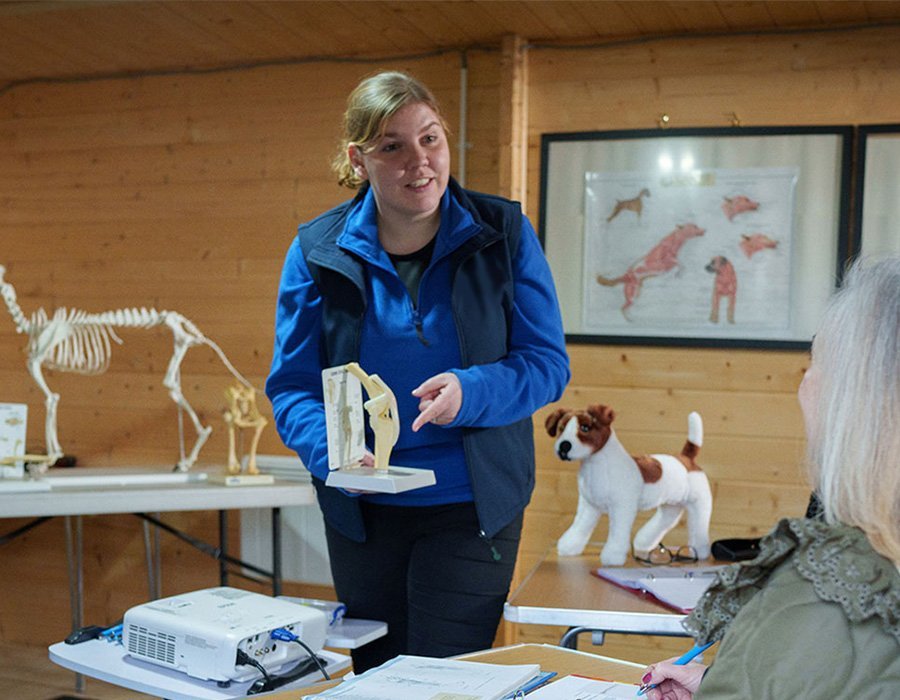
Course content and attendance
Is this course right for me?
The SEG Awards qualification is designed for learners with experience of working with small animals, whether employed or volunteering. Talk to us about your background and suitability before applying.
How you’ll learn
Teaching combines theory, written work and supervised practical assessment. The course includes 20 hours of pool training, 10 hours of aquatic treadmill training and 5 hours of water-management training.
Study commitments and support
Written work for each unit is normally due within two weeks of its presentation. If a resubmission is needed, the unit must be achieved within four weeks. After three unsuccessful submissions, learners may be required to repeat training, with additional costs.
If you need more time to understand a topic, you may request to defer the unit and attend a further training day before submitting work. This additional support does not incur an extra charge.
Some units may be taught together, so please allow enough time to meet the submission requirements. Units may be studied in a different order; Units 6–9 are normally studied after the other units have been successfully completed.
What you’ll study
Open a unit below to read its full description.
01Introduction to small animal hydrotherapyMandatory unit · M/651/2810
This unit provides Learners with an overview of small animal hydrotherapy. By understanding and managing risks, the Learner will explore the different elements essential in providing safe practice.
The unit is not intended to provide Learners with the level of skill and competence required to administer hydrotherapy treatments and Learners should not engage in any manipulation techniques unless qualified to do so. It is always imperative that learners act within their area of professional competence and personal limitations.
There are no practical requirements for this unit.
02Small animal anatomy and physiology – skeletal and muscularMandatory unit · R/651/2811
In this unit, Learners will explore the major elements of small animal structural anatomy essential for the hydrotherapist.
To administer hydrotherapy treatment, it is vital that the hydrotherapist has a sound understanding of small animal structural anatomy and how the bones, muscles, tendons and ligaments work together to be able to link this to the individual treatment plan and effectively improve their knowledge of land-based movement and function.
There are no practical requirements for this unit.
03Small animal anatomy and physiology – body systems and functionMandatory unit · T/651/2812
In this unit, Learners will explore the major elements of small animal body systems which are essential for the hydrotherapist.
To administer hydrotherapy treatment, it is vital that the hydrotherapist has a sound understanding of small animal systems to be able to take account of any clinical precautions in the plan for an individual and to be able to understand how the body systems function and enable movement.
04Common small animal conditionsMandatory unit · Y/651/2813
In this unit, Learners will explore how common small animal conditions and problems may impact on devising an individual hydrotherapy treatment programme. They will learn how to identify common conditions and problems and understand the considerations and management of small animal with specific challenges.
The unit is not intended to provide Learners with the level of skill and competence required to diagnose conditions. It is imperative that at all times Learners act within their area of professional competence and personal limitations, seeking veterinary advice as appropriate.
There are no practical requirements for this unit.
05Small animal health status and first aidMandatory unit · A/651/2814
In this unit, Learners will understand the importance of maintaining the health and welfare for each small animal patient in their care.
Learners will be able to undertake health checks essential for safe hydrotherapy practice.
Learners will be able to recognise and manage a variety of small animal first aid emergencies.
It is always imperative that learners act within their area of professional competence and personal limitations.
This is a knowledge and practical based unit, with requirements to physically demonstrate learning.
06Small animal assessment processMandatory unit · F/651/2816
It is a legal requirement for hydrotherapists to have a current referral for each small animal from a registered veterinary surgeon (RVS).
Hydrotherapists need to be able to assess risk effectively, to include evaluating the small animal patient’s suitability for hydrotherapy.
This requires an assessment process to evaluate and provide a safe and a beneficial treatment plan using relevant risk assessment skills.
This unit will enable the learner to understand the assessment process for safe practice. It is always imperative that learners act within their area of professional competence and personal limitations.
This is a knowledge and practical based unit, with requirements to physically demonstrate learning.
07Practical administration of hydrotherapy treatment in the poolMandatory unit · H/651/2817
In this unit, learners are required to prepare the environment and small animal patients for hydrotherapy. Learners will need to demonstrate how to manage a small animal during a hydrotherapy session in the pool to include effective administration of treatment techniques, monitoring and therapeutic interaction for each small animal as appropriate.
Learners will consider the importance of appropriate aftercare in relation to advice to the owner, completion of appropriate documentation and record keeping appropriate for each case in the pool.
This is a knowledge and practical based unit, with requirements to physically demonstrate learning. This unit requires 20 hours of practical training.
08Small animal behaviour for clinical practiceMandatory unit · D/651/2815
In this unit, Learners will explore the importance of understanding small animal behaviours in context of the hydrotherapy setting. By developing effective communication skills with the small animal in a therapeutic setting, the hydrotherapist will develop skills to address the mismatch of communication skill differences between humans and small animals and offer a safer environment to deliver the hydrotherapy treatment.
This unit will enable the learner to understand the behaviours seen in a therapeutic setting essential for safe practice. It is always imperative that learners act within their area of professional competence and personal limitations by working within their scope of practice and this does not mean they are behaviourists.
There are no practical requirements for this unit.
09Introduction to aquatic treadmill practiceMandatory unit · J/651/2818
In this unit, Learners will understand how to safely use an aquatic treadmill for small animal hydrotherapy. Learners will use the basics of small animal gait analysis before, during and after a hydrotherapy session.
This unit will also include the learner administering treatment techniques, monitoring, evaluation, and therapeutic interaction for each small animal as appropriate. Learners will also consider the importance of appropriate aftercare in relation to advice to the owner. It is always imperative that learners act within their professional scope of practice. Learners should not engage in any manipulation techniques unless qualified to do so.
Note: Preparation and after care of the small animal for a hydrotherapy treatment session is assessed in the pool unit.
This is a knowledge and practical based unit, with requirements to physically demonstrate learning. This unit requires 10 hours of practical training.
10Water managementMandatory unit · K/651/2819
In this unit, Learners will understand the importance of safe and effective water management for small animal hydrotherapy. Learners will explore the functions of the various pieces of plant and equipment, water chemistry, the relationship of the various chemicals used and management processes essential for safe practice.
It is always imperative that learners act within current health and safety legislation and work within their professional scope of practice and understand their limitations.
It is expected that learners will undertake the practical elements of this unit under the supervision of an appropriately qualified professional.
This is a knowledge and practical based unit, with requirements to physically demonstrate learning. This unit requires 5 hours of practical training.
11Professional and ethical practiceMandatory unit · R/651/2820
In this unit, Learners will explore the importance of professional, ethical and legal responsibilities for their hydrotherapy practice. An effective multidisciplinary team approach to optimise safe hydrotherapy practice is a part of this commitment. Learners are also required to commit to their own continuing professional development as part of their career journey.
There are no practical requirements for this unit.
Awarding body and professional recognition
Awarded by Skills and Education Group Awards (SEG). The Level 3 Certificate is an Ofqual-regulated qualification (610/4655/3).
Understand regulation and recognitionDiscuss your training options
Contact our friendly team to talk through your options.
We’re happy to help with course choices, entry requirements, study commitments or any other questions you may have.