
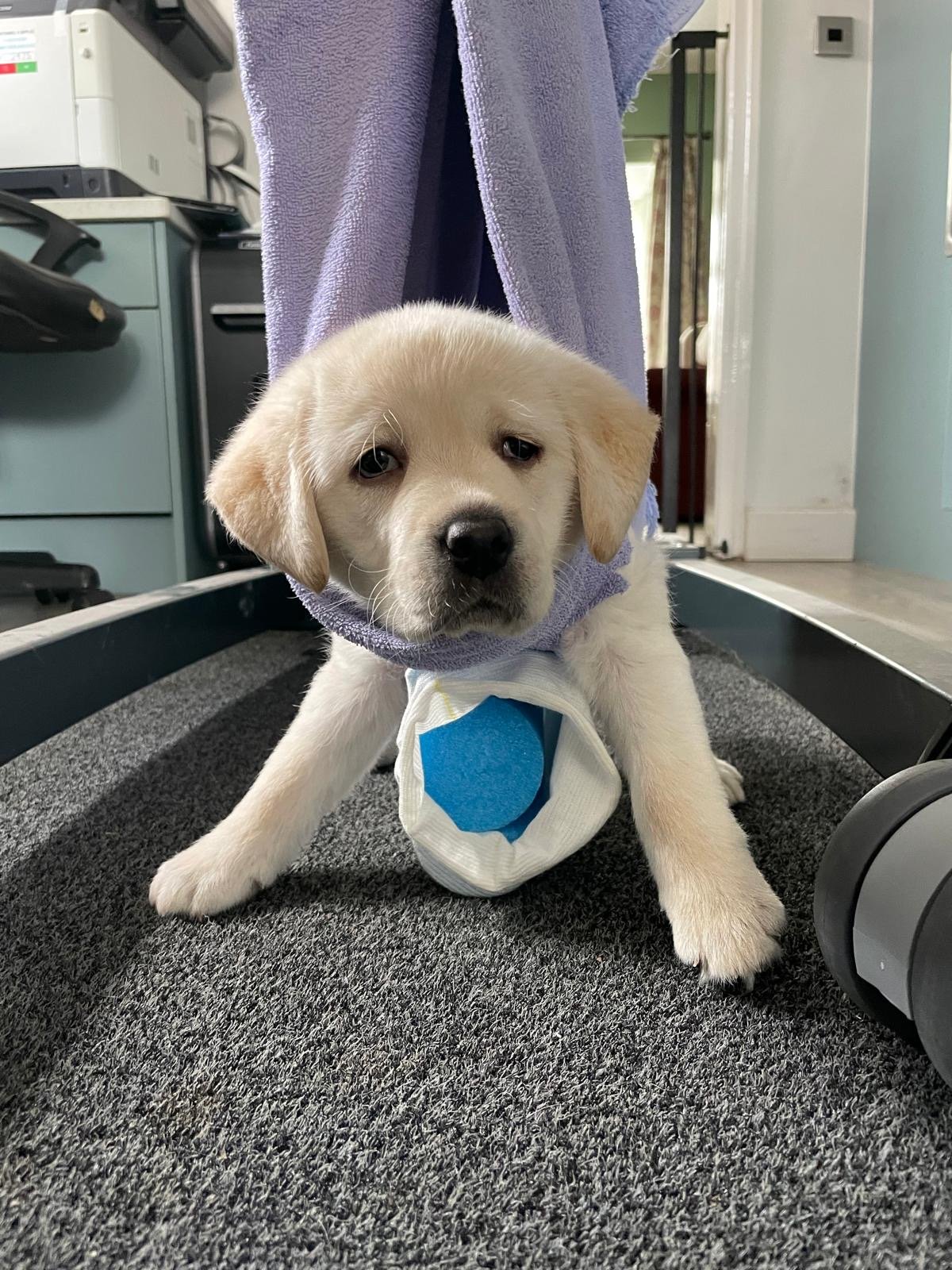
Meet Star
Star arrived at Teazledown at just 5½ weeks old. She was lying flat on her tummy, with all four legs splayed outwards. She looked like a little starfish, which is how she got her name.
She had swimmer puppy syndrome, named for the paddling movements that can resemble swimming. Star was unable to bring her legs underneath her body to stand. Although the hind legs are more commonly affected, all four of her limbs were involved.
Her breeder had been advised that euthanasia was an option. Two weeks had passed while the breeder did her best to help Star walk. By the time Star arrived, her ribcage had become very flattened, raising concerns about her breathing and digestion.
How Teazledown helped
Star’s care combined physiotherapy, support with positioning and plenty of patience. We adapted our approach as she grew stronger, following each small sign of progress.
Helping Star rest and move
Our first priority was to help Star lie on her side, taking the weight off her sternum. Her ribcage was so flat that she could not manage this herself. Rolled-up towels helped support her position, but frequent adjustments were needed throughout the night.
It was a huge change for such a young puppy: away from her mother and siblings, in an unfamiliar home with new people and dogs. Comfort and reassurance were as important as the exercises.
Cuddle time often included hands-on work to help improve the shape of her ribcage. We sang nursery songs as we guided her limbs through a walking movement, helping to prevent them from swinging outwards. Supportive tape helped keep her legs from splaying sideways, and an adapted baby sleepsuit sometimes protected her skin beneath the dressings.
When it became too much for her, we paused for a proper cuddle and a sleep before trying again. Between exercises, positioning, dressing changes and care, looking after Star was becoming a job requiring 12–15 hours a day.
Day three: a reason to celebrate
On the third day, Star fell asleep on her side without needing to be padded into position. It was a small moment, but an important milestone. There was plenty of celebration.
Finding a way to support her first steps
A homemade belly harness was our first attempt to support Star’s weight while she walked. It proved more difficult than expected: one person held the harness while another crawled behind her, helping to place her feet. We needed a rethink.
A wheeled hoist and an adapted towel provided a more stable way to support her. Soon, Star began placing her feet independently, roughly where they needed to be. It was an encouraging sign that she could find her walking pattern.
Daily tape changes continued to keep her legs supported while allowing forward movement. The work on her ribcage also continued every couple of hours. It was exhausting for Star and for everyone helping her.
Day five: an attempt to walk
On day five, Star tried to walk into her crate. Another milestone, and another reason to keep going.
Building strength and confidence
Now that Star was showing an interest in walking, we needed to encourage her without letting her legs slide sideways. That called for some lateral thinking.
We built a narrow wooden channel with low sides and a soft rubber-mesh surface for grip. Her feeding bowl was placed at the end, giving her a reason to walk towards each meal and stand to eat. At first she objected, as she often did to a new idea, but once she discovered the reward, she began to get the hang of it.
Finding the right approach for Star
We also tried hydrotherapy, but Star made her feelings very clear. She barked, howled, wriggled and sometimes froze. After three attempts, we stopped: it was too distressing for her.
Her progress would come through land-based physiotherapy, with activities and support adapted to suit her.
Day ten: a new world to explore
On day ten, chilly, damp weather gave way to warm sunshine. We tried the grass as a new surface, full of interesting smells.
It was a slightly daunting environment at first, but Star soon gave us a challenge of our own: keeping up with her in the belly harness as she zigzagged and sniffed her way around. Her indoor physiotherapy continued, and she was making tremendous progress with independent walking.
Her personality was blossoming too. She was feisty, determined and increasingly keen to get her own way. Eating and digestion were becoming easier, and without competition from stronger siblings, she was gaining weight. Before long, she needed the next size of sleepsuit.
By the end of the third week
Her gait was still wobbly, but by the start of the third week Star was tottering around much like a four-week-old puppy. The change from a tiny, flattened starfish to an active Labrador puppy was astonishing and went far beyond our hopes when she first arrived.
By the end of that week, we felt she was ready to return home. Everyone had fallen in love with her and was thrilled by what she had achieved.
Star’s progress on video
These short clips show Star practising moving on the grass and during a supported hydrotherapy trial.
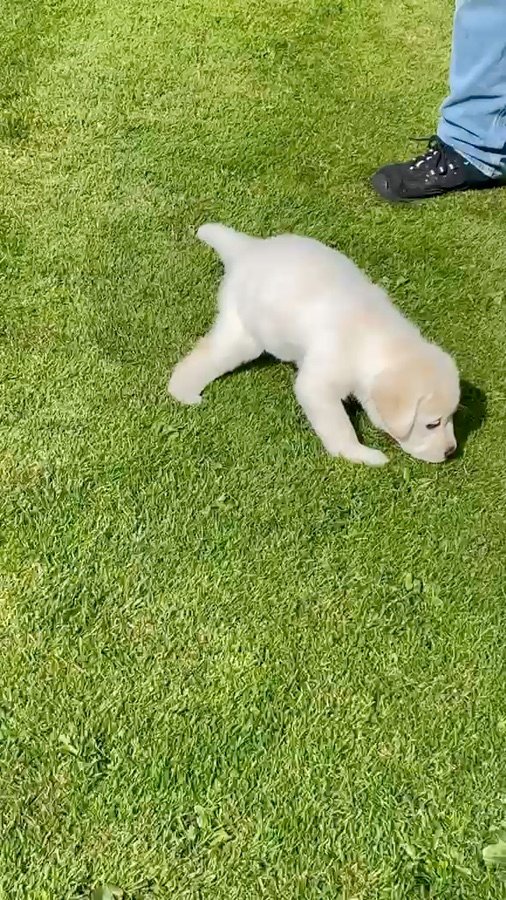
Exploring the grass
Star exploring the grass during her recovery.
Open video separatelyThe video could not be loaded. Please try the link above.
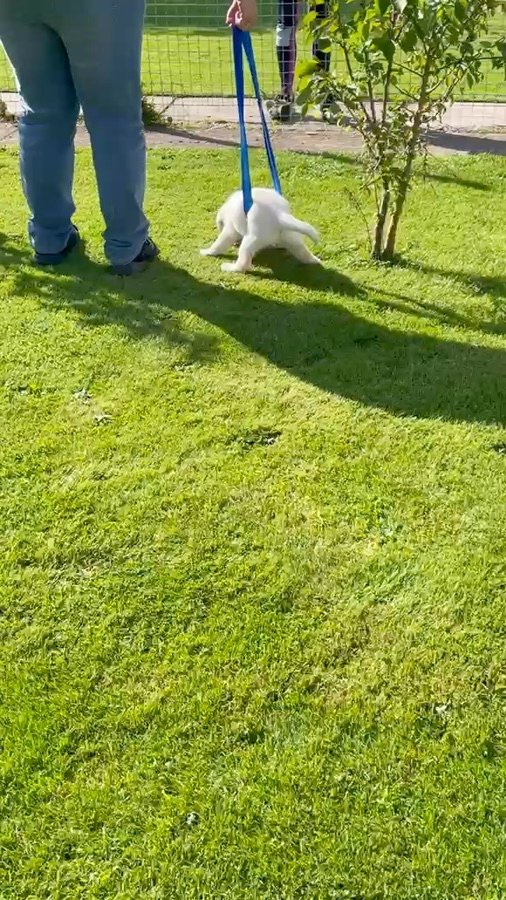
Supported steps outdoors
Star practising moving outdoors with support from her harness.
Open video separatelyThe video could not be loaded. Please try the link above.
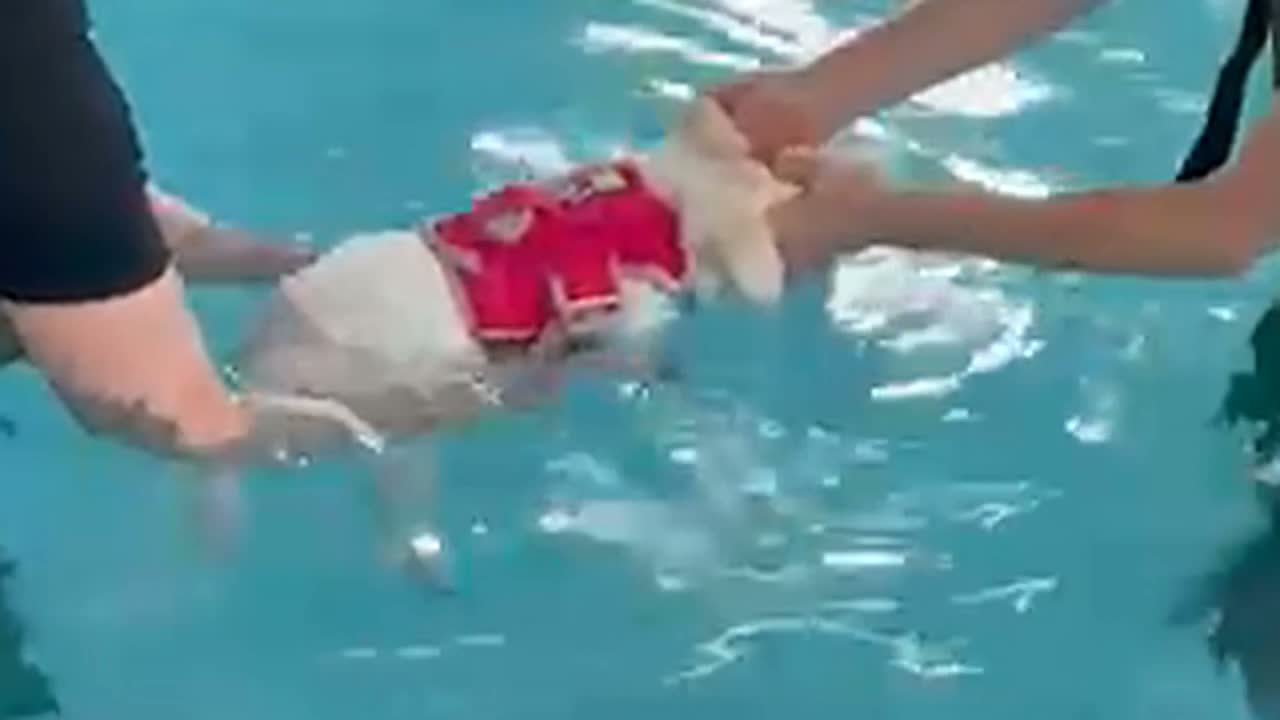
A supported hydrotherapy trial
Star during one of her hydrotherapy trials. Pool sessions were stopped when she found them distressing, and her care continued with land-based physiotherapy.
Open video separatelyThe video could not be loaded. Please try the link above.
How Star is doing now
Star now lives with a family who regularly take her camping and sailing. She runs on the beach, follows new smells across the moors and even swims in the sea — yes, swims!
She remains one of our most rewarding cases. Her progress reflected the dedication and determination of everyone who helped her, together with Star’s own remarkable personality. It is a joy to know we helped her reach this point.